

This site uses cookies to improve your experience.
Motorhome Hire UK
Motorhome Hire UK
LandCruise workshop supplies and installs a wide range of Victron systems into your motorhome providing a professional-grade, modular electrical foundation that ensures high reliability and seamless integration between solar, alternator, and shore power. Their systems are widely considered the “gold standard” for off-grid travel and renowned for extreme durability, with long lasting components even in demanding environments.
Victron products are designed with high-quality materials to withstand harsh weather, extreme temperatures, and the vibrations common in mobile motorhome environments.
Unlike all-in-one “power boxes,” Victron uses separate units (e.g., dedicated solar chargers and inverters). This improves heat dissipation and provides system redundancy; if one part fails, the rest of your electrical system remains functional.
Their inverters, such as the Phoenix inverter or the Multi-plus, provide clean power identical to a home socket, which is essential for protecting sensitive electronics like laptops and TVs.
Victron units feature built-in Bluetooth, allowing you to monitor real-time battery levels, solar harvest, and power consumption directly from your smartphone.
For high-end setups, a Victron Cerbo GX acts as a central hub. It enables remote monitoring via the free Victron Remote Management (VRM) portal, letting you check your system from anywhere in the world over the internet.
Tools like the Victron BMV-712 Smart Battery Monitor or SmartShunt provide precise “state-of-charge” percentages, so you never have to guess how much battery life you have left.
A Victron installation is highly customisable, allowing you to start with a basic setup and expand as your needs grow.
We can easily add more Victron Lithium Smart Batteries or extra solar panels without replacing your entire system.
The Pheonix or Victron Multi-Plus Inverter/Charger units, can “boost” limited campsite shore power with battery energy to prevent tripping external breakers when using high-draw items like a kettle.
The Victron Orion-Tr Smart DC-DC Charger ensures your leisure batteries are charged safely from the engine’s alternator while driving, even in newer vehicles with “smart alternators”.
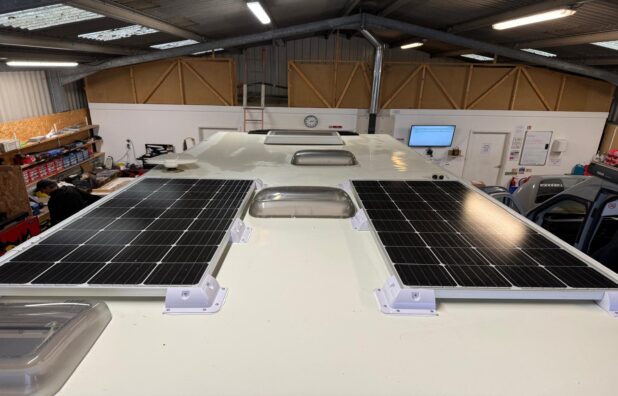
Fitting a solar power system to your motorhome provides several practical and financial benefits, primarily centred around achieving independence from traditional power sources.
Solar panels allow you to travel more freely without relying on campsite electrical hook-ups. This enables “wild camping” in remote areas while still powering essential appliances like lights, water pumps, and fridges.
While the initial investment is significant, you save money in the long run by avoiding expensive nightly campsite hook-up fees and generator fuel costs.
Solar systems provide a constant “trickle charge” to your leisure batteries, maintaining them at optimal levels and preventing the damage caused by full discharges. This can significantly extend the lifespan of your vehicle’s battery.
Solar panels operate silently and allow you to comply with noise regulations in quiet camping areas while reducing your carbon footprint.
Motorhomes equipped with modern solar technology often hold a higher value on the second-hand market, as buyers appreciate the built-in cost savings and self-sufficiency.
Victron systems are largely maintenance-free, requiring only occasional cleaning of the panels to remove dirt that might reduce efficiency.
The best solar power system for your motorhome depends on your typical travel style, ranging from simple kits for weekend trips to heavy-duty systems for full-time off-grid living
System Sizing Guide
To choose the right wattage, you must first calculate your daily energy usage in Watt-hours (Wh).
Weekend Users (100W–200W solar): Sufficient for charging phones, running LED lights, and a small water pump or 12V cool box.
Full-Time Travellers (300W–500W solar): Necessary for running a 12V fridge, laptops, fans, and constant device charging.
Off-Grid Users (600W–5000W+ solar): Required if you intend to use power-hungry 230V appliances like microwaves, kettles, or hair dryers via a large (2,000W+) inverter.
Critical Components to Consider
Panel Type: Mono-crystalline panels are more efficient and space-saving, performing better in low light. Rigid panels are more durable with longer warranties (often 10 years), while flexible panels suit curved roofs but have shorter lifespans.
Charge Controller: Always prefer an MPPT (Maximum Power Point Tracking) controller over PWM. MPPT can extract up to 30% more energy, especially in the variable UK climate.
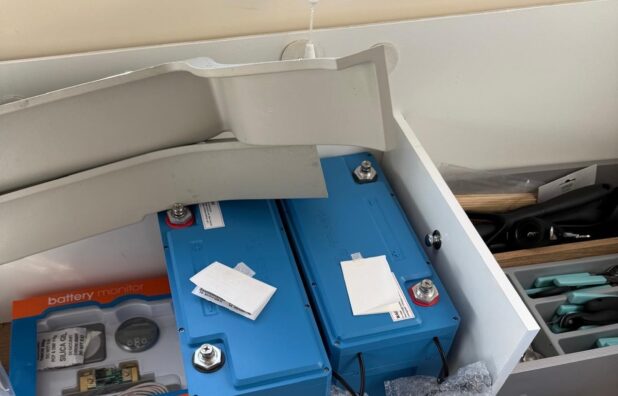
Batteries: Lithium (LiFePO4) batteries are recommended for serious off-grid use as they can be discharged to 80–90% capacity, whereas traditional AGM batteries should only be used to 50%.
Contact us to discuss your requirements and get a fully detailed quotation. We can also install additional 230v and USB sockets in suitable locations to provide access to power where you need it.
What would you like?

Friendly and helpful staff made re-filling our caravan gas supply super easy. Premises were convenient to access with car and caravan. So pleased we found this place!

Superb professional service from the team at Landcruiser. Fixed a sizeable scrap down the side of our motorhome like new and upgraded our solar panels and batteries so we can spend more time off grid! Excellent communication throughout and extremely high level of attention to detail and workmanship. Highly recommend for motorhome repairs and upgrades.

I used Land cruise to have a new leisure battery fitted to my motorhome. The workshop staff are friendly and knowledgeable. There is nothing that Drew doesn't know, he is an outstanding credit to the team 😁 Many thanks for your genuine advice and help throughout.